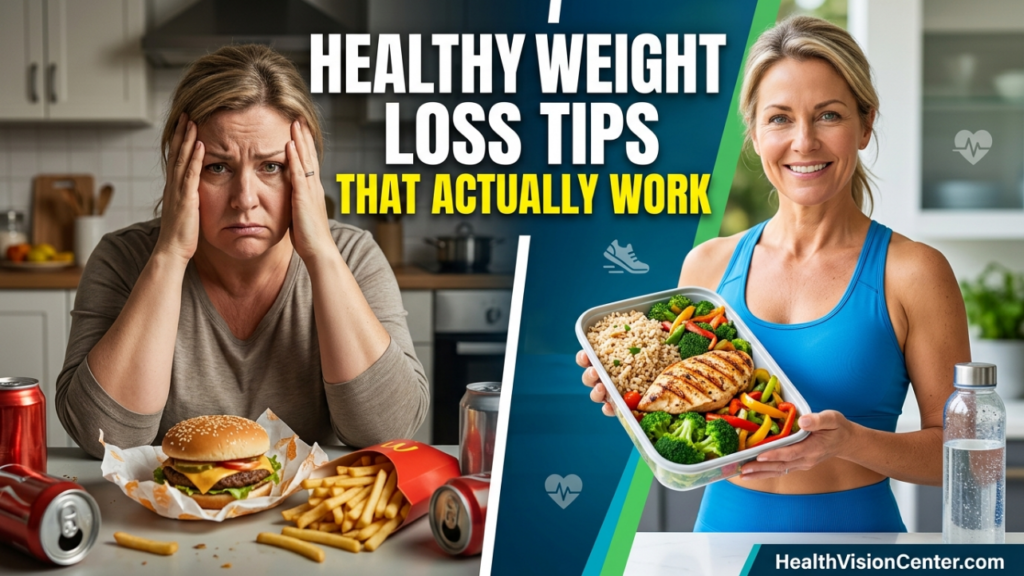

Healthy Weight Loss Tips That Actually Work
Losing weight can feel overwhelming with so much conflicting advice online. One day it’s low-carb diets, the next it’s detox teas or miracle supplements. The truth is that healthy weight loss isn’t about quick fixes—it’s about building sustainable habits that improve your overall health.
Healthy weight loss usually happens gradually through a combination of balanced nutrition, regular physical activity, adequate sleep, and consistent lifestyle habits. While everyone’s body responds differently, making small, realistic changes is often more effective than following restrictive diets that are difficult to maintain.
This guide shares evidence-based healthy weight loss tips that can help you lose weight safely while supporting your long-term health.
Medical Disclaimer: This article is for educational purposes only and should not replace medical advice. If you have obesity, diabetes, thyroid disease, or another health condition, consult your healthcare provider before starting a weight loss program.
Table of Contents
- What Is Healthy Weight Loss?
- Why Slow and Steady Weight Loss Works
- 15 Healthy Weight Loss Tips That Actually Work
- Best Foods for Weight Loss
- Foods to Limit
- Exercise Recommendations
- Sleep and Weight Loss
- Common Mistakes
- Expert Tips
- FAQs
- Final Thoughts
What Is Healthy Weight Loss?
Healthy weight loss means reducing body weight gradually through balanced eating and regular physical activity while maintaining good nutrition.
Instead of focusing only on the number on the scale, healthy weight management also aims to improve:
- Heart health
- Blood sugar control
- Energy levels
- Physical fitness
- Mental well-being
- Overall quality of life
For many adults, gradual weight loss is generally considered more sustainable than rapid weight loss, though individual goals and timelines should be discussed with a healthcare professional.
Why Slow and Steady Weight Loss Works
Crash diets often promise dramatic results, but they can be difficult to maintain and may increase the risk of regaining weight.
A sustainable approach can help:
- Preserve muscle mass
- Encourage long-term healthy habits
- Improve nutrition
- Reduce feelings of deprivation
- Support lasting weight management
Remember, lasting success comes from consistency—not perfection.
15 Healthy Weight Loss Tips That Actually Work
1. Focus on Whole Foods
Base most of your meals around nutrient-rich foods such as:
- Vegetables
- Fruits
- Whole grains
- Lean proteins
- Beans and legumes
- Nuts and seeds
Whole foods are generally more filling than highly processed foods.
2. Eat More Protein
Protein may help you feel full longer and supports muscle maintenance during weight loss.
Healthy protein sources include:
- Chicken
- Fish
- Eggs
- Greek yogurt
- Tofu
- Lentils
- Beans
3. Increase Your Fiber Intake
Fiber supports digestion and can help you stay satisfied after meals.
High-fiber foods include:
- Oats
- Apples
- Berries
- Broccoli
- Beans
- Whole grains
- Chia seeds
4. Drink More Water
Sometimes thirst is mistaken for hunger.
Try to:
- Drink water throughout the day
- Replace sugary drinks with water
- Carry a reusable water bottle
Staying hydrated also supports overall health.
5. Watch Portion Sizes
You don’t always need to eliminate your favorite foods—eating appropriate portions can make a difference.
Helpful strategies include:
- Using smaller plates
- Eating slowly
- Avoiding distractions while eating
- Paying attention to hunger and fullness cues
6. Limit Sugary Drinks
Sugar-sweetened beverages can add significant calories without making you feel full.
Consider replacing:
- Soda
- Sweet tea
- Energy drinks
- Sugary coffee beverages
with:
- Water
- Sparkling water
- Unsweetened tea
- Black coffee (if appropriate)
7. Don’t Skip Meals
Skipping meals may increase hunger later in the day, making it harder for some people to maintain balanced eating habits.
Aim for regular meals that include:
- Protein
- Fiber
- Healthy fats
- Complex carbohydrates
8. Exercise Regularly
Physical activity supports weight management and improves overall health.
Good options include:
- Walking
- Cycling
- Swimming
- Strength training
- Yoga
- Dancing
Even small increases in daily movement can make a difference.
9. Strength Train
Resistance exercises help preserve and build muscle, which is important during weight loss.
Examples include:
- Bodyweight exercises
- Resistance bands
- Free weights
- Weight machines
Aim for muscle-strengthening activities at least two days per week if appropriate for your fitness level.
10. Get Enough Sleep
Poor sleep may affect hunger hormones and make healthy eating more challenging.
Most adults benefit from 7–9 hours of quality sleep each night.
11. Manage Stress
Chronic stress may influence eating habits and overall well-being.
Healthy stress-management techniques include:
- Meditation
- Deep breathing
- Walking outdoors
- Journaling
- Spending time with loved ones
12. Plan Your Meals
Meal planning can help you:
- Reduce impulse eating
- Save money
- Make healthier choices
- Control portion sizes
Preparing meals ahead of time can also make it easier to stick to your goals.
13. Read Nutrition Labels
Checking nutrition labels helps you identify foods that are lower in:
- Added sugars
- Saturated fat
- Sodium
It also helps you compare serving sizes and calorie content.
14. Be Patient
Healthy weight loss takes time.
Small, consistent progress is often more sustainable than trying to lose weight as quickly as possible.
15. Track Your Progress Beyond the Scale
Weight isn’t the only measure of success.
You may also notice improvements in:
- Energy levels
- Fitness
- Clothing fit
- Blood pressure
- Blood sugar
- Sleep quality
- Confidence
-
Best Foods for Healthy Weight Loss
A healthy weight loss plan should focus on nutrient-dense foods that provide vitamins, minerals, protein, healthy fats, and fiber. These foods can help you stay full longer while supporting overall health.
1. Non-Starchy Vegetables
Vegetables are naturally low in calories and rich in fiber, making them an excellent choice for weight management.
Examples include:
- Broccoli
- Spinach
- Kale
- Cauliflower
- Bell peppers
- Cucumbers
- Zucchini
- Green beans
Aim to fill about half of your plate with vegetables at most meals.
2. Lean Protein
Protein helps support muscle maintenance and may increase feelings of fullness.
Healthy options include:
- Skinless chicken breast
- Turkey
- Fish
- Eggs
- Greek yogurt
- Cottage cheese
- Tofu
- Tempeh
- Beans
- Lentils
3. Whole Grains
Whole grains provide more fiber and nutrients than refined grains.
Good choices include:
- Oats
- Brown rice
- Quinoa
- Whole-wheat bread
- Whole-grain pasta
- Barley
4. Healthy Fats
Healthy fats can be part of a balanced weight loss plan when eaten in appropriate portions.
Sources include:
- Avocados
- Olive oil
- Almonds
- Walnuts
- Chia seeds
- Flaxseeds
- Pumpkin seeds
5. Fruits
Whole fruits contain fiber, vitamins, and antioxidants.
Healthy choices include:
- Apples
- Berries
- Oranges
- Pears
- Kiwi
- Grapefruit
Whole fruit is generally a better option than fruit juice because it contains more fiber.
Foods to Limit
No food needs to be completely off-limits for most people, but reducing foods high in added sugar, refined carbohydrates, and excess saturated fat may support weight management.
Examples include:
- Sugary soft drinks
- Candy
- Cakes
- Cookies
- Ice cream
- Chips
- Fast food
- Deep-fried foods
- Sweetened coffee drinks
- Highly processed snack foods
Enjoying these foods occasionally can fit into a balanced eating pattern for many people.
Exercise Recommendations
Exercise supports weight loss and offers many additional health benefits, including improved cardiovascular fitness, stronger muscles, and better mental well-being.
Cardio Activities
Examples include:
- Brisk walking
- Jogging
- Cycling
- Swimming
- Dancing
- Hiking
Aim for at least 150 minutes of moderate-intensity aerobic activity per week, or follow guidance from your healthcare provider based on your individual needs.
Strength Training
Building and maintaining muscle is important during weight loss.
Try:
- Squats
- Lunges
- Push-ups
- Resistance band exercises
- Dumbbell workouts
- Weight machines
Perform muscle-strengthening activities at least two days per week if appropriate for your fitness level.
Increase Daily Movement
Small lifestyle changes can also increase calorie expenditure throughout the day.
Ideas include:
- Taking the stairs
- Walking after meals
- Standing more often
- Parking farther away
- Stretching during work breaks
- Gardening or household chores
Every bit of movement counts.
Sleep and Weight Loss
Getting enough quality sleep plays an important role in maintaining a healthy lifestyle.
Poor sleep may:
- Increase hunger
- Affect food choices
- Reduce energy for physical activity
- Make healthy habits harder to maintain
To improve sleep:
- Keep a regular bedtime
- Limit screen time before bed
- Keep your bedroom cool and dark
- Avoid caffeine late in the day
- Develop a relaxing bedtime routine
Most adults benefit from 7–9 hours of sleep each night.
Expert Tips
Health professionals often recommend these sustainable strategies:
- Set realistic goals.
- Focus on long-term habits instead of quick fixes.
- Eat slowly and mindfully.
- Prepare healthy meals at home when possible.
- Keep healthy snacks available.
- Stay hydrated throughout the day.
- Don’t let occasional setbacks discourage you.
- Celebrate non-scale victories such as improved energy or fitness.
- Work with a registered dietitian if you need personalized guidance.
Common Mistakes to Avoid
Many people unintentionally make weight loss harder by following unrealistic advice.
Common mistakes include:
- Following extreme fad diets
- Skipping meals
- Drinking sugary beverages regularly
- Ignoring portion sizes
- Sleeping too little
- Depending on supplements instead of healthy habits
- Expecting rapid results
- Giving up after a temporary setback
Sustainable progress is more important than rapid weight loss.
Frequently Asked Questions
1. What is the healthiest way to lose weight?
For many people, the healthiest approach combines balanced nutrition, regular physical activity, adequate sleep, stress management, and gradual, sustainable lifestyle changes.
2. How fast should I lose weight?
A gradual rate of weight loss is generally considered more sustainable for many adults. Your healthcare provider can help determine an appropriate goal based on your individual circumstances.
3. Can I lose weight without exercising?
Nutrition plays a major role in weight management, but regular physical activity provides important health benefits and can support weight loss efforts.
4. Should I completely avoid carbohydrates?
No. Whole grains, fruits, vegetables, and legumes provide important nutrients and fiber. Instead of eliminating carbohydrates, focus on choosing nutrient-rich sources and appropriate portion sizes.
5. Do weight loss supplements work?
Some supplements may claim to promote weight loss, but many lack strong scientific evidence, and some may have side effects or interact with medications. Talk with a healthcare professional before using any supplement.
6. What should I do if my weight loss plateaus?
Weight loss plateaus are common. Review your eating habits, physical activity, sleep, and stress levels, and consider discussing your progress with a healthcare professional or registered dietitian for personalized advice.
Final Thoughts
Following healthy weight loss tips is about building habits you can maintain for the long term—not chasing quick fixes. A balanced eating pattern, regular physical activity, quality sleep, and stress management all work together to support sustainable weight management and overall health.
Remember that everyone’s body is different, and progress may not always be reflected immediately on the scale. Focus on consistency, celebrate small improvements, and seek guidance from a qualified healthcare professional if you have concerns about your weight or underlying health conditions.
Medical Disclaimer: This article is for educational purposes only and should not replace professional medical advice, diagnosis, or treatment. Always consult a qualified healthcare provider before making significant changes to your diet, exercise routine, or weight management plan.
Call to Action
Healthy weight loss starts with one small step. Choose one tip from this article—such as drinking more water, adding vegetables to your meals, or taking a daily walk—and put it into practice today. Visit HealthVisionCenter.com for more evidence-based articles on nutrition, fitness, and healthy living.